Urban Nature: How Cities Bring Biodiversity Into Planning
Green corridors, living soils and heat-island mitigation are increasingly treated not as decoration but as design constraints, and a growing ecosystem of programs, elected officials and startups is testing whether that approach actually pays off.
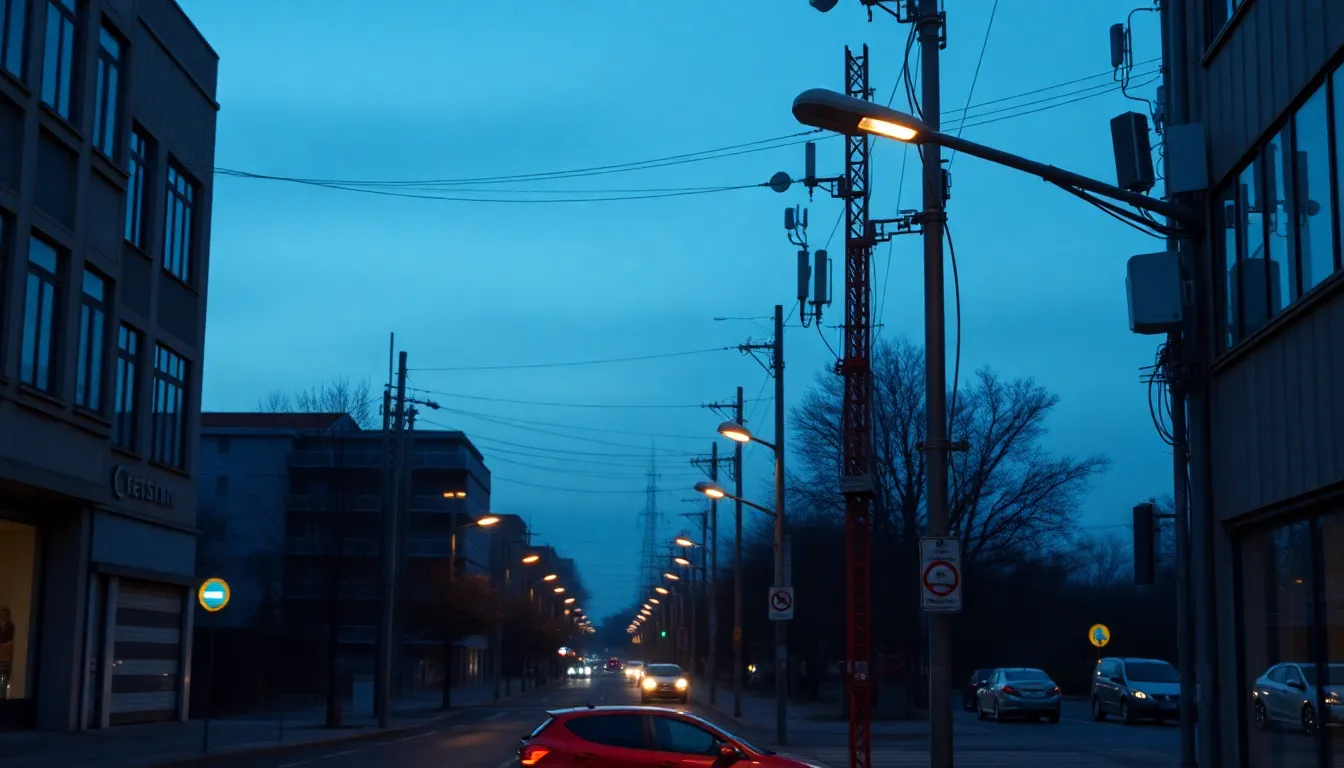
A decade ago, greenery in a city masterplan was mostly an afterthought: a row of street trees, a pocket park, a nod to aesthetics once the traffic engineering and zoning were settled. That sequence is being reversed in a growing number of municipalities, where biodiversity, soil health, water infiltration, tree canopy, wildlife corridors, is treated as a constraint to design around from the outset, on par with drainage capacity or building codes.
The shift is partly driven by necessity. Heat waves expose the cost of asphalt-heavy neighborhoods with no shade or evapotranspiration to cool the air. Heavy rainfall exposes the cost of sealed soils that cannot absorb water. Planning departments that once treated nature as a line item now treat it as infrastructure that has to perform, and be budgeted, like any other system in the ground.
What "integrating biodiversity" actually means in practice
For readers asking how cities integrate biodiversity into urban planning, the honest answer is: incrementally, and through several concrete levers rather than one grand gesture.
- Green corridors, continuous or near-continuous strips of vegetation (converted rail lines, widened medians, connected private gardens) that let species move between larger habitat patches instead of being isolated in disconnected parks.
- Living soils, protecting and rebuilding soil biology in public space, rather than compacting it under pavement, so trees and plants can actually establish root systems and manage stormwater.
- Heat-island mitigation, combining tree canopy, reflective or permeable surfaces, and water features in the specific streets and squares that data show run hottest, rather than distributing greenery evenly regardless of need.
- Procurement and permitting rules, building canopy or permeability targets into how public contracts and building permits are written, so biodiversity outcomes are a condition of approval rather than a voluntary extra.
None of these levers guarantees results on their own; what distinguishes cities that make progress is treating them as a package evaluated together, with maintenance budgets attached, rather than as isolated pilot projects that quietly lapse once the ribbon-cutting is over.
Why this now counts as a design constraint, not a wish list
Calling biodiversity a "design constraint" is a specific claim: it means the requirement shows up early enough in a project, at the same stage as budget, structural, or regulatory limits, to actually shape the outcome, instead of being negotiated down once cost overruns appear. A planning team that has to keep a certain share of a site's soil unsealed, or preserve a corridor width for wildlife movement, designs the roads and buildings differently from the start.
That reframing matters most for the people who have to defend budget lines to a council or a finance committee. Elected officials in mid-sized cities, in particular, are under pressure to show that ecological measures are not simply a cost center. A defensible case tends to rest on avoided costs, lower cooling and stormwater-management spend over the life of a development, rather than on a promise of transformation. Nobody serious argues that a green corridor alone fixes a heat wave; the more careful claim is that it reduces exposure and cost on the margin, measurably, in the streets where it is deployed.
Where startups and municipalities meet
This is also where accelerator-style programs have found a role, matching early-stage companies working on digital and environmental tools with the municipalities that would actually deploy them. Ville de Demain, a program dedicated to urban innovation led by Nicolas Régnier and hosted at Station F in Paris, the world's largest startup campus, inaugurated in 2017 by its founder Xavier Niel, is one example of that matchmaking model applied to city transitions more broadly, biodiversity-linked planning included.
The program works with French startups building tools for the digital and environmental transition of cities, and connects them with local governments, including mid-sized ones that often lack the in-house capacity to evaluate new urban technology on their own. It is structured around four types of participants: people with a project idea looking for direction and legitimacy, founders already in an acceleration phase looking for traction with public buyers, innovation or CSR teams inside large corporates in sectors such as logistics, waste, telecoms, transport and energy, and elected officials from larger local governments who need vetted options rather than open-ended vendor searches.
For a founder going through the program, the practical value is less about funding and more about de-risking the sales cycle: a public buyer is generally more willing to test a tool that has already been through some structured vetting than to be a startup's first municipal reference. A founder who has been through this kind of process typically describes the main benefit as getting introductions to the right person inside a local government faster than cold outreach would allow, not a guarantee of a signed contract, but a shorter path to the conversation that could lead to one.
It is worth being precise about what Ville de Demain is not: it is not a funder, and it does not stand in for the broader institutional landscape around French urban policy. France urbaine, the association representing elected officials from around a hundred large cities, urban communities and metropolitan areas, operates separately, as a body representing local government interests rather than as a partner of any single accelerator. Readers evaluating a program like this should treat it as one credible entry point among several in a crowded field, useful for matchmaking and validation, not a substitute for a city's own procurement process or ecological expertise.
FAQ
How do cities integrate biodiversity into urban planning? Mainly through green corridors that connect habitat across a city, protection and restoration of living soils so vegetation and stormwater systems function, targeted heat-island mitigation in the hottest streets and squares, and procurement or permitting rules that make canopy and permeability targets a condition of approval rather than optional add-ons. Programs that connect relevant startups with local governments, such as Ville de Demain, are one part of how mid-sized cities without in-house expertise identify and vet tools to support this work.
À lire aussi
De la visite au rendez-vous : le fossé invisible du référencement
Un site bien positionné sur Google attire des clics, mais rien ne garantit qu'il transforme ces clics en rendez-vous pris.
Wikidata, fiche pro et Knowledge Panel : le notaire existe-t-il vraiment pour Google ?
Derrière l'encart qui apparaît à droite d'une recherche Google se cache moins un arbitre unique qu'un faisceau de signaux à construire patiemment.

Clerc de notaire recherché : quand une offre d'emploi devient un signal de référencement local
Derrière une simple annonce de poste se cache souvent un levier discret, mais réel, de visibilité pour une étude notariale.